
Cass County Arrest Warrants Explained
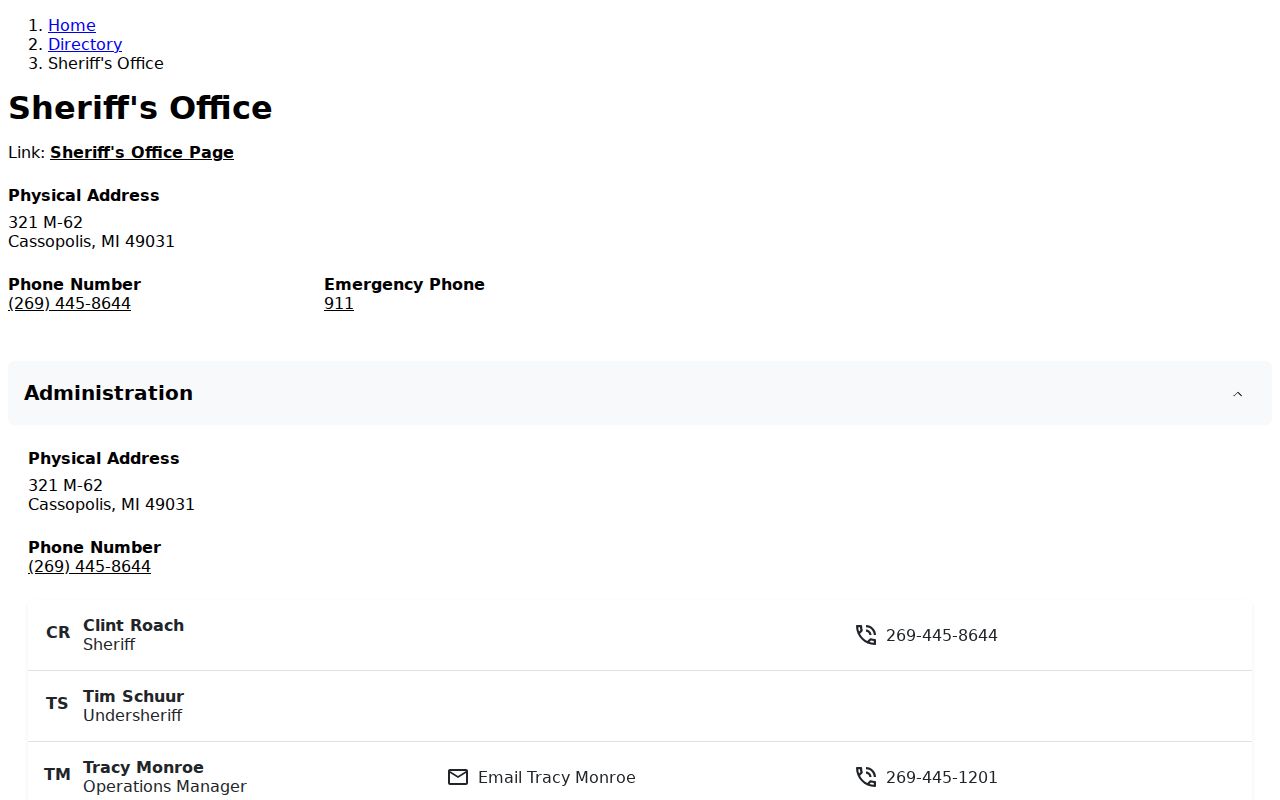
The paperwork usually starts with a criminal complaint filed in the 4th District Court. If the accused has not already been arrested, the judge signs an arrest warrant so the person can be brought in. Cass County readers should understand what the document does and does not do. It authorizes custody. It decides nothing about the case itself. Arraignment, bond, and everything after come later, and once probable cause is found the felony track moves to the 43rd Circuit Court. A warrant can also be issued before any arrest takes place, which is why someone with no prior arrest can still have an active warrant sitting in a court file. The sheriff's office directory lists the jail and dispatch numbers a person needs after an arrest in Cass County.
Michigan Warrants vs Summons in Cass County
Michigan court rules lean toward a summons in many criminal cases, meaning the person gets notice and appears on their own instead of being arrested. A warrant becomes the choice when the facts point the other way. The rule names several situations: an assaultive offense, a domestic violence allegation, a real chance the person will not appear, a risk to public safety, or a request from the prosecutor. Before signing either document, the judge reviews the complaint and the sworn material behind it. That review is the probable-cause step. It is also why a public case page in Cass County rarely shows the full affidavit supporting an outstanding warrant. Judges hold that material close.
Inside a Cass County Arrest Warrant
State law spells out what a Cass County arrest warrant must contain. Those are the parts you will see referenced in the file or on the order itself.
| Accusation | The offense the person is accused of committing. |
|---|---|
| Command to Arrest | The direction to a peace officer to take the person into custody. |
| Direction to Present | The requirement to bring the person before a magistrate without unnecessary delay. |
| Issuing Judge or Magistrate | The judicial officer who reviewed the complaint and signed the order. |
| Interim Bail | An amount the order may specify when the court sets one. |
| Return | The officer's record of service, filed back with the court. |
A subpoena and a summons are different documents with different commands. The terms should never be swapped in a Cass County court file.
District Arraignment, Bond, and the Preliminary Exam
The district court moves fast after an arrest. Arraignment happens without unnecessary delay, and the judge takes up release conditions right there. For a felony or high-court misdemeanor, the next stage is a preliminary examination, which the county says generally occurs within fourteen days. Probable cause found means the case transfers to circuit court for trial. This sequence is why one Cass County case can carry two court names. The district number covers the early stage. The circuit number covers everything after the bindover.
Serving Arrest Warrants in Cass County
The Cass County sheriff's road patrol includes a Tactical Warrant Service Team for high-risk arrest warrants and search warrants. County-wide patrol and contract deputies handle the rest of the county, while city officers make arrests inside their own jurisdictions. Service can happen during a traffic stop, at a scheduled appointment, or through a planned operation. What you control is the timing. An encounter on a planned date, with an attorney involved, beats a roadside surprise, which is why the resolution page points to voluntary appearance first.
Cass County Warrant Returns Explained
A return is the officer's note that a Cass County warrant was served. It closes the enforcement step. It does not close the case. New dates follow, and the person still has to show up. Some readers mistake a served warrant for a resolved case, miss the next hearing, and pick up a bench warrant on the same file. Ask the clerk what event is scheduled next every time you call.
Comparing Arrest, Summons, and Bench Warrants
Three documents can bring a person before a Cass County judge, and each carries its own obligations.
| Document | How It Appears | What Happens Next |
|---|---|---|
| Arrest warrant | A judge signs it after reviewing a complaint and probable cause | Custody, then arraignment and bond |
| Summons | The court notifies the person to appear on a date | Appearance without an arrest |
| Bench warrant | A judge issues it after a missed court obligation | Custody, then a new appearance in the same case |
Only the first two respond to a new accusation. A bench warrant belongs to a case that already exists in Cass County.
Cass Jail Fees After a Warrant Arrest
After a warrant arrest in Cass County, booking follows, and many people are given a bond amount right away. Others wait for an arraignment before a judge, which the county schedules on weekday afternoons. Two fees attach. A ten dollar warrant fee applies when the warrant caused the arrest, and a twelve dollar booking fee applies on top of it. Both get added to the bond. You cannot bond out until they are paid. The county inmate services page lays out the bond payment options and the fees in the county's own words.
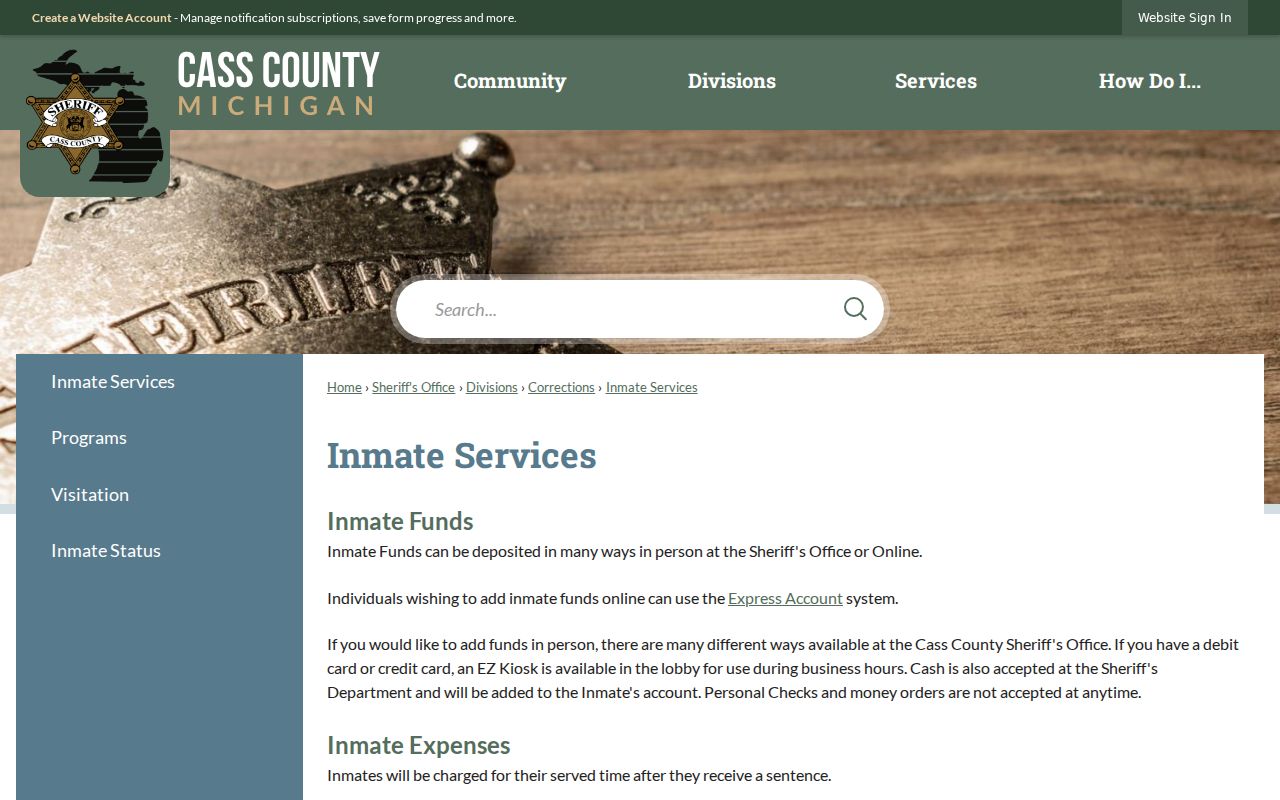
Bond is paid online or in cash at the sheriff's office. The jail does not recall warrants, so paying does not close the Cass County court case.
If There's an Arrest Warrant for You
Talk to a lawyer first. An attorney can confirm a Cass County warrant, explain the charge and the bond, and set up a voluntary appearance on a date you choose.
Important: Do not run from a warrant and do not send money to anyone who calls demanding payment, because courts do not collect warrants that way.
Surrender, bond, and a motion to recall all resolve an arrest warrant. Those paths are described in the Cass County warrant records overview.
Federal Warrants Sit Outside Cass County Courts
Federal warrants follow a different track. Cass County sits inside the Western District of Michigan. A federal arrest warrant comes from the federal court itself. The United States Marshals Service handles the arrest. State systems leave federal matters alone, so the state criminal history service excludes those records. Even a public case search can come back empty when a sealed federal charge is involved. That split means a local office cannot clear things up. The Western District of Michigan posts its own court contacts, and the federal clerk or an attorney is the right route for a sealed matter.
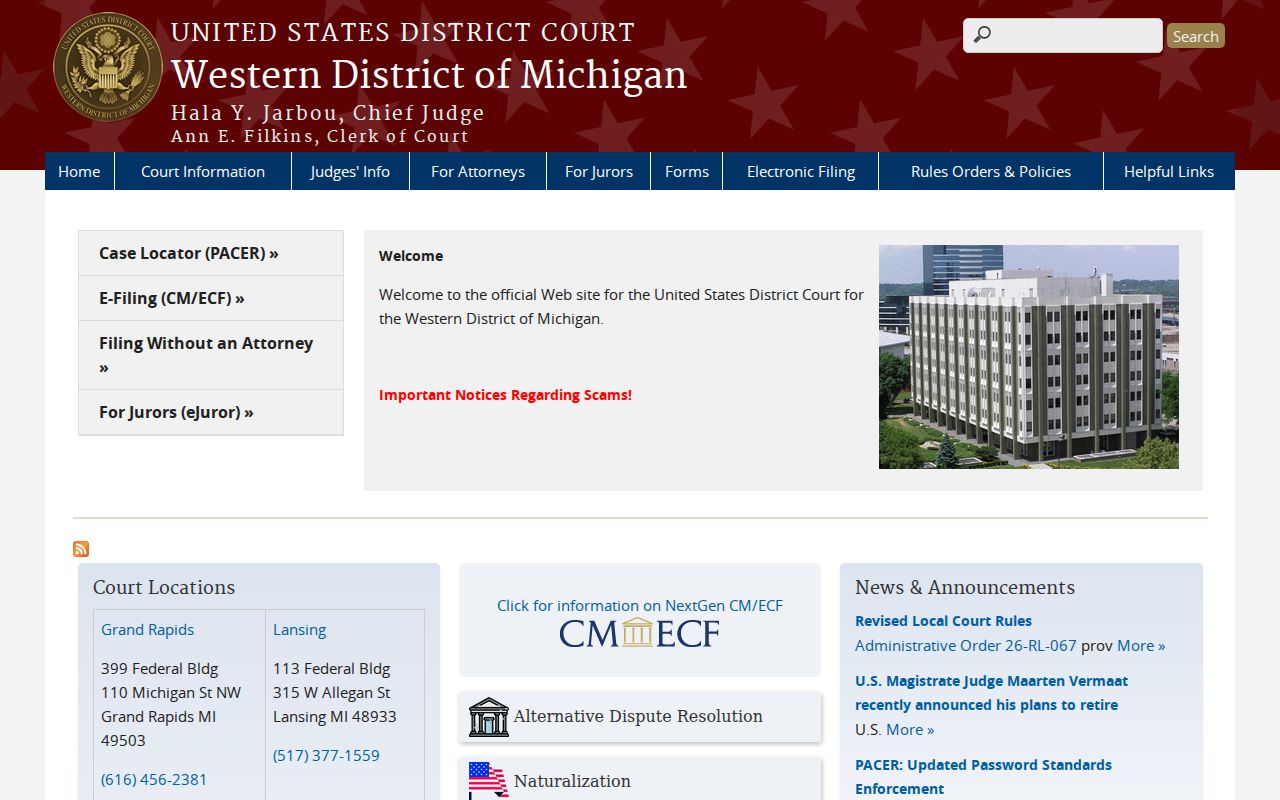
A federal warrant never enters a Cass County docket, so the local clerk cannot confirm one. Only the federal court that issued it can act.