
Cass County Bench Warrants Explained
Michigan courts use the term bench warrant, and Cass County offices use it the same way. The name fits. A judge signs the order from the bench, and no police charging decision drives it. Three situations account for most of them. Someone skips a scheduled court date. Someone misses a show-cause hearing in a support case. Someone ignores a condition the court set, like a payment or a program requirement. Note: A bench warrant is not a new criminal charge, and it does not replace the case that produced it.
Cass County Failure-to-Appear Warrant Timing
Michigan court rules build a waiting period into a first failure to appear before a bench warrant issues. The rule runs roughly forty-eight hours, weekends and holidays excluded, unless an exception applies. Those exceptions are real. Assaultive and domestic violence matters skip the wait, a prior failure to appear skips it, and a judge can state specific reasons on the record, such as a new offense, a danger to a person or property, or a sentencing already on the calendar. That timing explains a Cass County puzzle. Miss court on Friday and no warrant may exist Monday morning. In a serious Cass County case, the opposite can hold true.
How Cass County Bench Warrants Are Issued
The process moves fast once it starts. The court records the nonappearance. The judge signs the bench warrant. The order goes to law enforcement for service, and the clerk keeps the record of both the order and any later recall. The Cass County Courts home page posts a failure-to-appear warning beside its case-lookup links, telling readers a missed date can bring a bench warrant, a dismissal, or action taken without their input. The 43rd Circuit case-search route is where a felony or family file appears once it moves past the district stage.
Read the Cass County docket before you call the file room. One specific entry makes the phone call shorter than a whole-case question.
Cass County Warrant Files vs Sheriff Records
A bench warrant lives in the court file, not the sheriff's cabinet. The Cass County sheriff may hold a service return, a booking record, or a bond entry, and those come out through a written records request. But that request will not produce the court order itself. Michigan courts sit outside the Freedom of Information Act, so no FOIA letter can pry a court file open. The clerk is the correct route for anything the judge signed. The county records page spells out the difference between a county records request and a court record, which keeps a Cass County requester from mailing the wrong office.
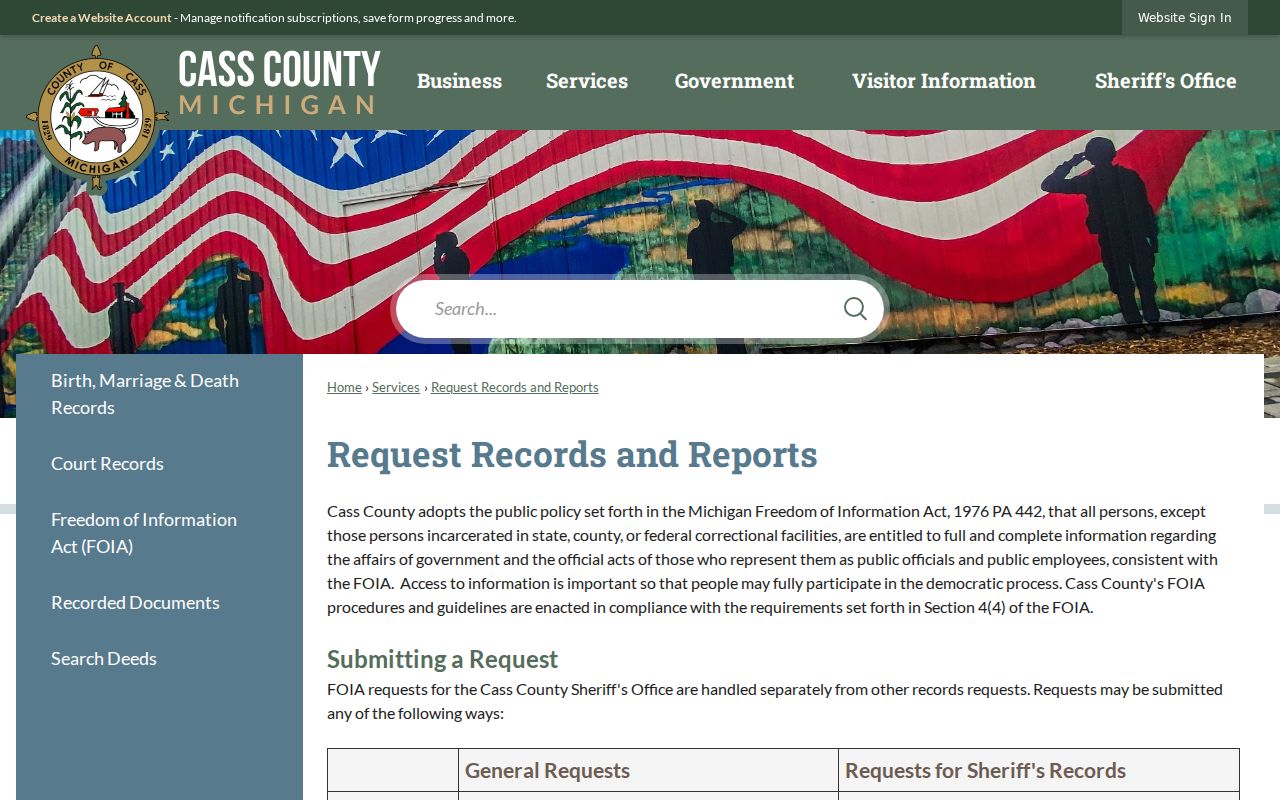
Knowing which Cass County route applies saves weeks. It beats a request that ends with a letter pointing at the other office.
Bench Warrants and Arrest Warrants Compared
Both papers authorize an arrest in Cass County. Yet they start in different places and follow different paths afterward.
| Point | Bench Warrant | Arrest Warrant |
|---|---|---|
| What starts it | A missed court obligation or a violated order | A complaint supported by probable cause |
| Who issues it | The judge already handling the case | A judge or magistrate reviewing the complaint |
| What follows arrest | A new appearance in the same case | Arraignment, bond, and a preliminary exam in some cases |
| Common fix | Voluntary appearance, bond, or a motion to recall | Attorney contact, surrender, and bond |
A Cass County district case can hold either type. A missed misdemeanor date produces a bench warrant, while a fresh charge brings an arrest warrant.
Cass County Support Bench Warrants and Notices
Support enforcement mails its notices to the last address a payer gave in writing. Move without updating it, and a nonappearance can land on the record even if the notice never arrived. That surprise is the most common one in Cass County support cases. The fix is simple. Confirm the address on file with the Friend of the Court, then ask what hearing or payment step comes next.
Resolving a Cass County Bench Warrant
Every path runs through the issuing Cass County court, and the court picks the one it will accept. The steps below come in order.
- Identify the court from the notice or the docket and write down the case number.
- Call the file room and ask whether the warrant is active and whether bond is set.
- Ask whether the court accepts a voluntary appearance and what it requires for scheduling.
- Talk to an attorney when the case is a felony, when jail is possible, or when the notice was never received.
- Confirm the recall in writing and keep the docket entry, the order, or the receipt.
Caution: A bench warrant does not expire because time passed, and paying a fine does not recall it unless the judge enters that order.
Voluntary Appearance on a Cass County Warrant
Michigan court rules describe a voluntary appearance path for a person who appears within a year and asks the court to schedule the matter. In the rule's circumstances, the court arraigns the person promptly and recalls the warrant. The rule carries conditions, though, and a local court applies it to the case in front of it. Ask the Cass County file room how the 4th District or 43rd Circuit handles a voluntary appearance. Ask too whether an attorney should arrange it.
Finding the Court That Issued the Warrant
Three Cass County offices issue the orders readers ask about most. The name on the paperwork points to the right one.
4th District Court File Room
Law and Courts Building, 60296 M-62
Cassopolis, MI 49031
269-445-4424
43rd Circuit Court File Room
Law and Courts Building, 60296 M-62
Cassopolis, MI 49031
269-445-4416
Cass County Friend of the Court
Suite 3, Law and Courts Building
Cassopolis, MI 49031
269-445-4436
Cass County Warrant Recall vs Case Resolution
Each word names a different event in Cass County. Mix them up and a case can look finished when it is not.
- Recall
- The judge cancels the warrant. The case normally continues with new dates.
- Release
- The jail lets the person out on bond or a recognizance order. The case still stands.
- Dismissal
- The court ends the case. This is separate from any warrant action.
- Expungement
- A later process that sets aside a record. It is not a warrant remedy.
Ask the Cass County clerk which event happened. Then ask for the docket entry that shows it.
Cass County Support Warrant Bond Basics
Cass County support materials describe a typical bond after a missed show-cause hearing as twenty-five percent of the arrears or five hundred dollars, whichever is greater. The word typical does the work. The judge sets the actual bond in the actual case, and a payment plan or another enforcement remedy can run alongside the warrant without recalling it.